Welcome

Showing posts with label Guangdong Province. Show all posts

Thursday, 17 December 2015

Sun Yat-sen Memorial Hall: Honoring the Founder of the Nation


In 1895, Sun Yat-sen entered Guangzhou with the intent of revolutionizing the Qing government which had been exposed as corrupt and incompetent. Although the uprising failed and Sun was sent into exile, his presence had been felt, and would continue to be felt well into the future.

The man known as "Father of the Nation" and "forerunner of democratic revolution" was so revered that after his demise, his local and overseas supporters raised funds to erect a hall in Guangzhou for him.

Designed by Chinese "starchitect" Lu Yanzhi, the octagonal building opened its doors in 1931. Lu infused western supporting structures and detailing into a traditional Chinese mausoleum design.

The hall is focused around a central 71 meter space that is covered by a wide dome. The massive space is impressively supported entirely from its edges, awing many with its openness. A stage is at one end, and performances or concerts are occasionally held for audiences of over 4000 people.

There is a small exhibit of photos and a few relics, detailing moments of Sun's life. Sun rejected his background in medicine for a life dedicated to transforming China. His life philosophy was encapsulated in what he called the Three Principles of the People: nationalism, democracy, and the people's livelihood. Pictures of Mao Zedong and Zhou Enlai accompany those of Sun, but all photo descriptions are in Chinese only. Periodic free tours are also given, but again, in Chinese only. Truthfully, if there is no performance taking place, there isn't a lot to keep one occupied there.

For many people, the front garden is the highlight of the memorial hall experience, a pleasant and quiet respite, pleasantly decorated with flowers and carefully groomed trees. A stately statue of Sun himself stands before the hall, hand on cane, eyes focused on the future. Sun's life was undeniably fraught with conflict, struggle, and exile. But the Memorial Hall stands in sharp contrast to that. If he were to visit, he would probably enjoy it.

Source: cri

Sunday, 2 August 2015

Guangzhou launches 72-hour visa-free stays

South China's mega-city Guangzhou started offering international transit passengers 72-hour stays on Thursday.
Guangzhou is the third Chinese city to introduce the visa-free policy, following capital Beijing and commercial hub Shanghai.

An 85-year-old man from New Zealand, who gave his surname as Hepburn, and his wife were the first to enjoy the new policy as they arrived at Guangzhou Baiyun International Airport at 5:50 a.m..
"We got to know about the visa-free policy from the Internet half a month ago," said Hepburn. "We wanted to take the chance for a visit."
Xiao Shuanggui, a local travel agency manager who received the Hepburns, said his agency had received orders from 30 international tourists in the past month.
The visa-free policy should bring 20 percent more customers to his travel agency, said Xiao.
The visa-free scheme covers travelers from 45 countries, including France, Germany, the United States and Japan.
Under the plan, transit travelers are allowed to freely visit Guangdong Province, where Guangzhou City is located.
The visa-free scheme is expected to bring five billion yuan (809 million U.S. dollars) in tourism revenue for the province, according to insiders' calculations.
Source: Xinhua via china.org.cn

Tuesday, 9 June 2015

Marvelous Nankunshan Mountain National Forest Park


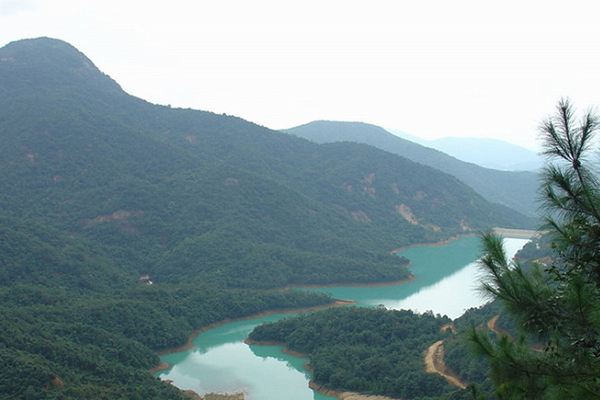
Located close to metropolitan areas such as Shenzhen, Zhuhai, and Guangzhou, Nankunshan Mountain has become one of the most popular summer resorts in Huizhou, Guangdong Province. (Source: CRI)

Thursday, 2 April 2015

Chaozhou, Guangdong province


There is a saying in China: "If you haven't been to Chaozhou, you haven't really been to Guangdong."

Largely isolated from the rest of the country for much of its history, the city has developed a uniqueness in everything from language to architecture that is known as Chaoshan culture.

The Chaozhou language is completely different to the Mandarin spoken in the rest of China and there is no written form of it. It is passed from generation to generation only as the spoken word.

Food, art, and everything else about the city also has a flavor that can't be found in the rest of China. This makes Chaozhou a great place to experience something different and yet still very Chinese.

Here are some main attractions:

1. Guangji Bridge

Guangji Bridge, which crosses the Hanjiang River in the east of the city, was the world's first bridge that can be opened and closed.

It was originally built in AD 1174 during the Southern Song Dynasty, but the present construction was finished around 200 years ago.

The outer parts of the bridge are made of stone and dotted with airy pavilions, while the central part is made of wood and floats on boats. This floating section can be disconnected to allow boats to pass through the bridge.

The pavilions and pagodas along the bridge are engraved with beautiful calligraphy and carved images, some a thousand years old.

The bridge is also a good spot to view some of the city's most beautiful scenery, including Beacon Hill and Hanwengong Ancestral Temple.

2. Kaiyuan Temple

This palace-like courtyard was first built in 738 AD, but the present building, which is made of a combination of wood and stone, is about 200 years old.

The temple is a Buddhist center and includes architectural styles from across the dynasties.
Inside are examples of calligraphy and stone tablets, some carved with scenes from Buddhist stories, others with images of daily life.

3. Memorial Arch Street
With 23 memorial arches, this is the longest street of its kind in China. Each arch is attached to a touching story - about moral integrity, scholarly honor or official achievements. The oldest of the arches dates back to 1517 and the newest to 1785.

The street has an exotic feel. Much of it was built during the early Qing Dynasty and influenced by the architecture of Southeast Asia, mixed in with architectural styles from around China.

Take a rickshaw ride down the street and soak in the atmosphere or slowly browse your way along the craft shops that line it.

The embroidery shops there sell finely made work decorated with images of birds, flowers and animals. There are also elaborate woodcarvings and delicate straw mats for sale.

Chaozhou is the birthplace of Chinese ceramics: the industry has been here for 2,300 years. It is said that Chaozhou ceramics are "white like jade, thin as a piece of paper, bright like a mirror and fine like thread".

Food and culture

Seafood is a major feature of Chaozhou cuisine, its flavor enhanced with sauces such as tangerine jam and broadbean paste.

Duck and goose are also local favorites. The city's famous spicy goose is served with garlic and vinegar sauce. The use of flavoring is much less heavy than in most parts of the country, with emphasis instead placed on the freshness and quality of ingredients.

For snacks try the city's fried spring rolls or beef balls.

After dinner, nothing beats sitting back in one of the city's tea houses sipping Gongfu tea, which was first drunk in the Song Dynasty and remains an important part of social etiquette in Chaozhou.

If you end up visiting a local family you can be sure of a cup of Gongfu tea, which has a bitter taste that lingers in the mouth.

Drinking Gongfu tea is more a lesson in aesthetics than a solution to being thirsty. In the city's teahouses, tea services are often accompanied by music, traditionally played on a combination of string instruments, gongs, drums and flutes.

In the evening take in some Chaozhou opera, which began around 500 years ago. It includes clowns, folk dances and balladic songs all combined with some skilful acrobatics. 

Source: China Daily

Thursday, 12 March 2015

Guangzhou, The Great South Gate of China

Guangzhou is the capital of Guangdong Province in southern China. According to the 2010 census, it has a population of 12.7 million, making it the third largest city in China after Shanghai and Beijing.

 Chen Clan Academy 

Located at Zhongshan 7th Road, the Chen Clan Academy is a symmetric complex consist of 19 buildings with nine halls and six courtyards. Facing south, the complex forms around a north-south axis. A large collection of southern China art pieces, for example, wood carvings and pottery, can be found in the structure. The Chen Clan Academy complex exemplifies traditional Chinese architecture and decoration style, and has influenced cultural and architectural developments worldwide.

Shangxiajiu Pedestrian Street 

Shangxiajiu Pedestrian Street is a commercial pedestrian street in Liwan District. Shangxiajiu is composed of the unique and historical architecture based on Tong Lau and teahouses, featuring the characteristics of European and Chinese styles. It has a group of old famous stores, such as the Guangzhou Garment Store, the Herring Shoes and Hats Store, and the Dalu Clock and Watch Store. It also has some well-known restaurants, including the Guangzhou Restaurant, the Taotaoju Restaurant, Wenchang Chicken, and Taotao Ginger and Onion Chicken.

Sun Yat-sen Memorial Hall 

The Sun Yat-sen Memorial Hall is an octagon-shaped building in Guangzhou. The hall was designed by Lu Yanzhi and was built with funds raised by local and overseas Chinese people in memory of Sun Yat-sen. Construction work commenced in 1929 and completed in 1931. The hall is a large octagonal structure with a span of 71 meters without pillars, housing a large stage and seats 3,240 people.

Museum of the Mausoleum of the Nanyue King 

The Museum of the Mausoleum of the Nanyue King is a museum in Jiefangbei Road, Yuexiu District. With an area of 1,4000 sq. m, the tomb is the witness of Guangzhou’s history of over 2,000 years. It is well known for its well-preserved tomb and funerary antiquity from the Han Dynasty, as well as elegant and grand architecture from the Lingnan (south of the Nanling Mountain) area.

 Sacred Heart Cathedral 

The Cathedral of the Sacred Heart of Jesus (耶穌聖心主教座堂) also known as Sacred Heart Cathedral (聖心堂) is a Roman Catholic cathedral in Guangzhou. It is the seat of the Archbishop of Roman Catholic Archdiocese of Guangzhou. The cathedral is located at 56 Yide Lu (or Yat Tak Road). It is on the north bank of the Pearl River and stands at the heart of the busy old town.

Guangxiao Temple 

The Cathedral of the Sacred Heart of Jesus (耶穌聖心主教座堂) also known as Sacred Heart Cathedral (聖心堂) is a Roman Catholic cathedral in Guangzhou. It is the seat of the Archbishop of Roman Catholic Archdiocese of Guangzhou. The cathedral is located at 56 Yide Lu (or Yat Tak Road). It is on the north bank of the Pearl River and stands at the heart of the busy old town.

Yuexiu Park 

Yuexiu Park is the largest urban park in China and is a lush green area that flows over acres of hills and includes several lakes. It includes the Ming Dynasty Zhenhai Tower, now home to the Guangzhou Museum.

Lantern Festival at Yuexiu Park

The Lantern Festival officially ends the Chinese New Year celebrations. In ancient times, the lanterns were fairly simple, and only the emperor and noblemen had large ornate ones; in modern times, lanterns have been being embellished with many complex designs. For example, lanterns are now often made in shapes of animals. The lanterns can symbolize the people letting go of their past selves and getting a new one, which they will let go of the next year.

Jiefang Bridge

The Bridge connects the Haizhu District with the Yuexiu District, and is one of nine bridges connecting Haizhu with downtown Guangzhou and the business districts. Guangzhou’s annual Dragon Boat Race takes place between Jiefang Bridge and Renmin Bridge.

Dragon Boat Festival 

Duanwu Festival, also known as Dragon Boat Festival and the Double Fifth, is a traditional and statutory holiday originating in China and associated with a number of East Asian and Southeast Asian societies. Three of the most widespread activities for Duanwu Festival are eating (and preparing) zongzi, drinking realgar wine, and racing dragon boats.

Shamian Island 

Shamian Island is a sandbank island in the Liwan District of Guangzhou city. The territory was divided into two concessions given to France and the United Kingdom by the Qing government in the 19th century. The island is a gazetted historical area that serves as a tranquil reminder of the colonial European period, with quiet pedestrian avenues flanked by trees and lined by historical buildings in various states of upkeep.

Temple of the Six Banyan Trees 

The Temple of the Six Banyan Trees is an ancient Buddhist temple originally built in 537 in the Liang Dynasty in Guangzhou. The temple's proximity to foreign consulates in Guangzhou has made it a regular destination for families participating in the international adoption of children from China. Typically families receive blessings for their newly adopted children at this temple in front of the statue of Kuan Yin.

Source: Fotopedia

Saturday, 27 December 2014

High-speed rail reaches China's rugged southwest

(Xinhua) The first high-speed train to operate on the recently finished Guiguang and Nanguang railways set off from the southwestern city of Guiyang on Friday Morning.

The new high-speed railways will upgrade railway networks in southwest China's Guizhou province, Guangxi Zhuang autonomous region and the southern Guangdong province.

With a total investment of 125.9 billion yuan (US$20.3 billion) and a projected construction time of 6 years, they will help service 192 million people across the three provinces.

The 856-km Guiguang high-speed rail line reduces travel time between Guiyang, the capital city of Guizhou province and Guangdong's capital city of Guangzhou from 21 hours to 4 hours and 9 minutes.

The 574-km Nanguang high-speed railway, a section of Guiguang railway, slashes travel time between Nanning, the capital city of Guangxi Zhuang autonomous region to Guangzhou from 13 hours to 3 hours and 19 minutes.

Li Shengming, a passenger of Train D2805, is heading for Guangzhou for an eight-day trip. A senior at Guizhou University, Li regularly uses trains when travelling between the two cities. He says it used to take more than 20 hours.

"It took almost a whole day, jammed in the full-packed carriage. It was really a tough journey," Li said. "With the high-speed train, however, the journey now only takes less than five hours. It's unbelievable."

The train set off from Guiyang North Railway Station at 9am and is expected to arrive in Guangzhou at 2:47pm with seven stops altogether.

The train, loaded to capacity, will pass through the mountainous regions of Guizhou, crossing through tunnels and passing by several ethnic villages.

Passengers cheered when the train reached 250 kilometers per hour, its top speed.

Madam Hu, 68, who is travelling with her friends, took a picture of the speed display with her cell phone.

"This is a historic moment for the people of Guizhou. It's the first high-speed railway linking Guizhou, my hometown. I have been looking forward to this moment since construction began," said Hu.

Another bullet train is travelling from Guangzhou to Guiyang.

The high-speed rail is expected to boost development of tourism, manufacturing and agriculture in the region.

Source: xinhua via want china times

Sunday, 26 October 2014

China's top 7 Danxia landforms


Mount Danxia (Guangdong)

Mount Danxia is a noted scenic area near Shaoguan in the northern part of Guangdong province. The Danxia mountain is formed from a reddish sandstone that has eroded over time forming a range of mountains surrounded by curvaceous cliffs and unusual rock formations (Danxia Landform). It is described by the local signage as a "world famous UNESCO geopark of China." There are a number of temples located on the mountain range and visitor can enjoy many scenic walks in the area. There is also a river that winds through the mountain area and boat trips along the river are offered to visitors.

Danxia Mountain also has a few unique stones such as the Yang Yuan Stone, Yin Yuan Stone, Breasts stone, Sleeping Beauty and other attractions which make Danxia Mountain a "natural sex culture museum." Particularly noted are two formations: a stone pillar called the Yangyuan ("male/father stone") that bears a remarkable resemblance to a phallus and the Yinyuan hole, which somewhat resembles the female labia.

In the 2010 UNESCO list of world heritage sites, Mount Danxia was listed as a natural World Heritage Site as part of China's Danxia landform

Best travel time: All year around

Wuyi Mountains (Fujian)

The Wuyi Mountains are a mountain range located in the prefecture of Nanping, in northern Fujian province near the border of Jiangxi province. The mountains were listed as a UNESCO World Heritage Site, for cultural, scenic, and biodiversity values in 1999.

The Wuyi Mountains are located between Wuyishan City, Nanping prefecture in Fujian province and Wuyishan,in the city of Shangrao in Jiangxi province. The world heritage site has a total area of 99.975 hectares that is divided into four core parts: the Nine-Bend Stream Ecological Protection Area (36,400 ha) in the center, flanked by the Wuyishan National Nature Reserve (56,527 ha) to the west and the Wuyishan National Scenic Area (7,000 ha) to the east. The fourth part, the Protection Area for the Remains of Ancient Han Dynasty (48 ha) is located in a separate area about 15km to the south-east of the other lcoations. The core parts are surrounded by an additional buffer zone of 27,888 ha.

Best travel time: summer, although it's very hot then but everything is exuberant.

The golden lake (Fujian)

The golden lake is located in Taining County in the northwest of Fujian province. A man-made lake sits at the upper reach and is about 60 kilometers long, and has a capacity of 8.7 hundred million cubic meters. The Golden Lake is surrounded by mountains and verdant forest. Stone bamboo shoots stand tall with springs flowing through them. There are more than 1,000 historic sites, such as the Baishuiji waterfall, Canglu Temple, the lover's peak, great Chibi, above the water, the five-kilometer-long calm lake, to name a few. These features make up the unique scenic spot. The Golden Lake is also regarded as "Lake of Gold" by tourists at home and abroad.

Best travel time: all year around

Mount Longhu (Jiangxi)

Mount Longhu is located in Jiangxi province. It is famous for being one of the birthplaces of Taoism, as many Taoist temples were originally built upon the mountainside. It is particularly important to the Zhengyi Dao as the Shangqing Temple and the Mansion of the Taoist Master are located here. It is known as one of the Four Sacred Mountains of Taoism.

Two of the temples are of Immortal City and Zheng Yi, all founded by Zhang Daoling, the Han Dynasty founder of the religion. There are more Taoist temples in nearby Shangqing. One of the temples in Shangqing is mentioned in the beginning of the famous Chinese novel "Outlaws of the Marsh." Mount Longhu also carries great cultural significance as it is a historical burial site of the Guyue people, who placed their dead in hanging coffins on the mountain cliffs.

In August 2010 UNESCO inscribed Mount Longhu on the World Heritage List as part of the six sites that make up the China Danxia landforms.

Best travel time: all year around

Langshan Mountain (Hunan)

Langshan Mountain is one of China's National Geological Parks famous for its unique Danxia landform and literally means "Crimson Glow." It is a rare topographic feature in world geography. 

Huge rocks of dark red color with grotesque shapes give tourists a marvelous sight. It is located in Xinning County, about 500 km away from Changsha, capital of Hunan province. In the south, Langshan Mountain is connected with Guilin, and in the north it echoes Zhangjiajie. Covering an area of 108 square kilometers, Langshan Mountain is filled with a rich natural scenery and abundant tourism resources. There are more than 500 scenic spots in Langshan Mountain. Among which the most famous are Tianyi Lane, Chili Peak, Zixia Cave, Fuyi River, Innate Bridge, Octagonal Castle, Emperor Xun Forest Park and the Xicun Ancient Dwelling.

In 2008, Langshan Mountain was nominated as a World Nature Heritage. In august, 2009, some experts from the World Nature Heritage visited the site for inspection, and the mountain is expected to become a World Nature Heritage site next July. If this happens, it will be the second World Nature Heritage in Hunan after Wulingyuan in Zhangjiajie. The name of Langshan comes from an ancient legend. It is said that when Shun, a legendary monarch in ancient China, passed by the mountain, he felt the mountains and rivers here were so wonderful, so he entitled the mountain with a Chinese character - Lang, meaning "good mountains."

Langshan Danxia landform and the evolution of its climate and features are representatives of Earth's historical evolution in Southeast Asia since the Cretaceous, and also represents the crust evolution process and the ancient environmental change of southeast China over 100 million years. It is considered to be an excellent example of the main stage of geo-evolution history.

Best travel time: all year around

Zhangye (Gansu)

Zhangye Danxia is located in the middle of the Hexi Corridor in Gansu Province's Zhangye city. 

Zhangye Danxia landforms cover one hundred square mountain hills, with unique shapes and colors.

Zhangye Danxia landforms offer a wide and magnificent scene, peculiar shapes, bright colors, and is the most typical arid region in China and the largest area of Danxia landscape. It has a very high scientific and tourism value. Zhangye Danxia landform mainly covers the territory of Linze, Sunan 
County with an area of 300 square kilometers. Hierarchical areas are scattered and feature steep rock walls and rich, color classes and colorful screen tower gorges and lakes,

Best travel time: June-September

Chuishui (Guizhou)

The Chishui Danxia inherited from the synergy of the strong and intermittent Cenozoic uplifts of the Himalayan Orogeny and the heat-moisture matched Asian Monsoon, and it has not been damaged from the scouting process of the last glaciations.

Chishui Danxia demonstrates the richness of the Danxia landform diversity. Positive and negative Danxia landforms are not only of high value in explaining Danxia landform evolution, but also show high aesthetic significance.

The Chishui Danxia is big and has tall forests where ancient vegetation and modern vegetation stemming from many species co-exist, revealing an important and on-going process of biology and ecology. Chishui Danxia has a high-level of biodiversity and provides refuge and habitats for many rare and endangered species.

Best travel time: all year around

Source: China Daily

Friday, 24 October 2014

Guangdong Stands Ready for Ebola Prevention

(CRI) Precautionary measures are being put in-place in Guangzhou and Shenzhen to stop the potential spread of the Ebola virus, which has killed thousands of people in West Africa this year.

The two major cities of Guangdong Province are home to a relatively large population of Africans.

As the 116th China Export Commodities Fair kicked off on Wednesday in Guangzhou, the city has started strict examination of all attendees.

Anyone whose body temperature is above 37.5 degrees Celsius will be sent to the hospital for a further check-up.

The provincial authorities have designated 27 high-level hospitals to get ready for treating Ebola cases.

The No.8 People's Hospital of Guangzhou launched an Ebola case response drill to test capabilities in preventing the deadly virus from spreading.

The Shenzhen No.3 People's Hospital has given training to all of its staff, and tested their protective clothing for airtightness.

Guangdong has ruled out possible Ebola cases as 43 people suspected of infection tested negative for the deadly virus. A total of 8,672 people from Ebola-ridden areas have entered the province since August 23, and so far, 5,437 people have been released from medical observation.

Source: CRI

Tuesday, 6 May 2014

Six wounded in knife attack at southern China rail station

(Reuters) - At least two, and as many as four, assailants wielding long knives wounded six people in an attack on Tuesday at a railway station in China's southern city of Guangzhou, police and state media said, in the latest of a series of assaults to raise jitters around the country.

Police gave no reason for the attack, but China's nervousness about Islamic militancy has grown since a car burst into flames on the edge of Beijing's Tiananmen Square in October and 29 people were stabbed to death in March in the southwestern city of Kunming.

The government blamed militants from the restive far western region of Xinjiang for both those attacks. 

Resource-rich and strategically located Xinjiang, on the borders of central Asia, has for years been beset by violence blamed by the Chinese government on Islamist militants.

Guangzhou police "arrived quickly on the scene" on Tuesday and shot one of the attackers. The official Nanfang Daily said another suspect had been caught by police after fleeing the scene.

"After verbal warnings were ineffective, police fired, hitting one male suspect holding a knife, and subdued him," Guangzhou police said on an official microblog.

They did not identify the attackers.

Provincial television showed pictures of what it said was an apparently injured suspect being pressed to the ground by police and plainclothes security officials, as they removed a bloodied white t-shirt.

It was not possible to see the person's face.

The attackers carried half-meter (20-inch) knives, wore white clothes, including white hats, and launched their assault as passengers were leaving the station, city newspaper the Guangzhou Journal wrote on its microblog.

There were a total of four attackers, some other Chinese media microblogs said in their reports.

The official Guangzhou Daily, citing a store owner who witnessed the violence, said the suspects squatted on the ground next to his shop for about two hours, covering their baggage with clothing.

They suddenly let out a shout, pulled knives from their bags, and began attacking people, the daily said on its microblog. Police were on the scene within minutes and began firing warning shots, it added.

Photos circulated online in state media showed police cordoning off an empty plaza, with an ambulance parked nearby and bloodspots on the ground.

Speaking while on a visit to Hong Kong, U.S. Assistant Secretary of State for East Asian and Pacific Affairs Daniel Russel expressed "horror, outrage and sympathy" at the Guangzhou attack.

"We oppose terrorism in all forms, and in those instances where the available information or the information shared by the Chinese authorities pointed to terrorism by a group or individual, we have condemned it as terrorism," he said.

China last week reacted angrily to U.S. criticism of the level of cooperation from Beijing on fighting terrorism.

China blamed religious extremists for a bomb and knife attack last Wednesday at a train station in Urumqi, the regional capital of Xinjiang, that killed one bystander and wounded 79.

The government called the attackers "terrorists", a term it uses to describe Islamist militants and separatists in Xinjiang who have waged a sometimes violent campaign for an independent East Turkestan state.

Exiles and many rights groups say the real cause of the unrest in Xinjiang is China's heavy-handed policies, including curbs on Islam and the culture and language of the Muslim Uighur people.

Beijing is unhappy at the U.S. State Department's 2013 country reports on terrorism, published last month, which said China's cooperation on fighting terrorism "remained marginal" and that the Chinese provided scarce evidence to prove terrorist involvement in incidents in Xinjiang.

Source: Reuters by Ben Blanchard 

Thursday, 13 March 2014

Dreamlike Jinjiang River in Guangdong


Jinjiang River is part of Danxia Mountain Scenic Area near Shaoguan city in the northern part of  Guangdong province. It is a World Heritage Site.


Source: xinhua