Welcome

Showing posts with label Fujian Province. Show all posts

Thursday, 5 November 2015

View of sunrise over clouds in Wuyi Mountain, Fujian


Photo taken on Nov. 2, 2012 shows the view of sunrise over clouds at a scenery spot of Wuyi Mountain in Fujian Province. (Xinhua/Yi Fan)

Monday, 21 September 2015

Xunpu oyster village: Fresh seafood, flamboyant women

Visitors flock to Xunpu Village (蟳埔村) for two things: oysters, and a photo of the colorfully dressed women who sell them.

The oyster women are usually well past middle age -- it's their flamboyant costumes, exotic hairdos and supposed Arabic heritage that piques tourists' interest.

And the oysters themselves? Well, they might just be the freshest and tastiest in all of China.

Fresh, meaty oysters

Approximately 10 kilometers southeast of downtown Quanzhou, Xunpu is a tiny fishing village located at the estuary of the Jinjiang River.

The 1.5-square-kilometer neighborhood is most celebrated for its fresh, meaty oysters.

Fujianese consider the oysters produced in Xunpu to be the best. Knowledgeable foodies in Quanzhou drive here regularly to stock up on freshly shucked oysters for cooking at home.

A made-to-order oyster omelet (海蛎煎) is the local specialty.

The oysters are pan-fried with eggs, sweet potato starch and chives. Although the dish tastes quite similar to the Teochew equivalent, the Xunpu version is less crispy.

Visitors can sample a Xunpu oyster omelet for RMB 20 (US$3) per plate at the no-frills small eateries clumped near the intersection of the waterfront boulevard Fenghai Lu (丰海路) and the only other main street (it's nameless street) in the village. The street doesn’t seem to have a sign, but you'll know when you're there.

With so many oysters sold every day, Xunpu villagers have found an ingenious way to put the mountains of empty shells to good use: build houses.

In the back alleys of the village, huts and one-story buildings stand with outer walls insulated by oyster shells.

Locals believe these outlandish shell structures won't get eroded by the salty sea breeze. Some houses have been standing for more than 200 years and show no signs of dilapidation.

Lam Hong-ki, a graduate student of the University of Hong Kong, is awed by the village's organic architecture.

"The oyster shell houses are simply splendid," Lam says. "They're no cookie-cutter houses -- each one has its own life and stories."

Although wealthier villagers have moved into the uninspiring concrete buildings along the main street, newly built oyster-shell houses are still dotted around.

“Unlike those famous villages in China that are commercialized and charge outrageously high entry fees,
Xunpu is very authentic and the villagers' way of life is relatively undisturbed at the moment," Lam continues.


Fisherwomen fashion: flamboyant and flowery

The women of Xunpu's are the village's other main draw.

Most women living in Xunpu are aged 40 or more (most young natives leave Xunpu to live in big cities for a better career). Married women wear old-style pink floral tunics and loose black trousers.

They twist their hair into a chignon or a bun, and decorate it with colorful garlands. Favorite flowers include chrysanthemum, jasmine and magnolia buds.

A granny now in her sixties, sporting a double-ring garland set off by yellow chrysanthemum, says that when she was a newlywed decades ago, she spent more money on flowers than on food.

Some Chinese historians believe that the villagers of Xunpu are the descendents of Arab traders and seafarers, which is why the women wear a distinctively different set of costumes and head ornaments than the average Han Chinese.

During the Song and Yuan dynasties, Quanzhou enjoyed fame and prosperity as the Arabs' first port of call on the Maritime Silk Road in China.

The traders brought ivory, spices, rhino horn and other exotic goods, and then sailed back to the Middle East with Chinese tea, silk and porcelain.

Mazu followers

Today, however, Xunpu locals are loyal followers of the cult of Mazu (aka Tian Hou or Heavenly Goddess, the protector of seafarers) rather than Islam; and the center of worship in the village is a Mazu Temple, not a mosque.

The annual Mazu procession, which falls on the 29th day of the first Lunar calendar month, is a red-letter day for the village, when all the women dress up.

But travelers don't need to wait till next year to see the fisherfolk fashion extravaganza. Women here are colorfully attired every day, as they believe that this is one of the ways to make sure their seafaring husbands will come home in one piece.

A good location to observe the local women and their fashion is the market.

With men struggling for a livelihood on their boats or at the oyster farms, the women are the mainstay of the oyster trade in the marketplace.

At the end of the one and only main street in the village, a covered market serves as both a grocery shopping arcade and a community center. Every day, aunts and grandmas natter away their afternoon while shucking the shelled creatures on the waterfront.

Source: CNN Go

Tuesday, 9 June 2015

Xiamen sojourn

Acoastal city in southeast Fujian province, Xiamen has been an important port and trading hub since imperial times. The city has continued to build on its strong commercial ties and in 2011, its total foreign trade value hit $70.1 billion (56 billion euros), up by 23 percent from 2010. It also recorded total foreign investment of $2.24 billion, up by 36.4 percent during the same period.

Xiamen was listed as a special economic zone in 1981 and industry continues to play a major role in its economy. In 2011, its GDP hit 253.5 billion yuan ($40 billion, 32 billion euros), up by 15.1 percent from 2010. Other key industries include international trade and tourism.

Xiamen has also made plans to promote its cultural industry as a new growth engine. The city plans to cultivate 50 big culture-related companies and 30 projects as well as build 10 culture-related industry parks.

Its aim is to achieve a 25 percent annual growth in the sector and have it form 10 percent of the city's GDP by the end of 2014.

Due to its proximity to Taiwan, Xiamen has also built up close economic and cultural links with the island including those in the financial and emerging industries.

Boasting more than 700 years of history, rich southern Fujian culture and beautiful natural beauty, the city continues to serve as a rewarding destination for both Chinese and foreign tourists. Regarded as "a garden in the sea", Xiamen provides a beautiful home for 3.61 million residents and received 35.2 million visitors last year. In a survey conducted by the China Tourism Association in 2011, the city was also labeled "the most romantic city for vacation" in China.

Here are some of the city's highlights:

1. Gulangyu Island (Drum Wave Islet in Chinese)

Situated in the southwest of Xiamen, Gulangyu is considered the must-see destination for visitors. The island is full of scenic spots and the architecture of different countries from the colonial period in the 18th century, when it was used as an international settlement. People can find temples in traditional Chinese style,
Japanese cottages and original Western consulates in the European style.

In 1988, the island was listed as a State-level scenic area. As the island is home to many renowned Chinese musicians and pianists, it is also called the Island of Music.

Today, it is still the only island in the country that prohibits vehicles. Tourists can choose to spend three to four hours walking around Gulangyu while enjoying the beautiful seaside view, or walk right into the winding streets in the center of Gulangyu, and explore the unexpected and sophisticated combination of Eastern and Western cultures.

Ganghouzai seaside resort is located in the south of the island and is recognized as the best beach in Xiamen.

With soft sand, gentle waves and an average temperature of 21 C all year around, the resort is an ideal spot for beach lovers. It offers yachts and motorboats, as well as other forms of water recreation.

2. Xiamen University

Founded in 1921, the university is the first Chinese university founded by overseas Chinese. Besides its academic prominence, Xiamen University is famous for its seaside beauty and relaxed atmosphere.

On campus, visitors can find a collection of beautiful architecture combining Chinese and Western styles, various tropical plants and a Lotus Lake with swans.

There are two museums: the Museum of Lu Xun, named after the famous Chinese writer, and the Museum of Anthropology, considered the only one of its kind in China.

Located in Siming South Road, the university sits next to South Putuo Temple, a Buddhist temple built on the steep rocks of the Wulao Peaks.

3. Piano Museum

This Piano Museum in Gulangyu is the only one of its kind in China. Established in 2000, the museum is located in Shuzhuang Garden. An Australian-Chinese named Hu Youyi collected more than 100 pianos and donated them to this museum.

The collection includes a gold-plated piano, a large upright piano, an old piano with eight pedals and other valuable pianos from Italy, the UK, France and other parts of the world.

Visitors can learn about the 200 years of the evolution of the piano within this small museum.

Eating and drinking

As an important branch of Southern Fujian cuisine, Xiamen cuisine is mainly served steamed, fried and stewed. Dishes are usually fresh and light in flavor, and are sometimes slightly spicy. Famous offerings include seafood and vegetarian treats.

There are more than 200 varieties of Xiamen snacks, with rice dumplings, fishball soup, oysters and barbeque sauce noodles proving most popular.

At the Huangzehe Xiamen specialty snacks restaurant in Zhongshan Road in Siming district, tourists can find all traditional snacks.

Fresh seafood is available in almost every restaurant in the city. The most recommended eatery is Xiaoyanjing food stall, located in Hubin Middle Road. The restaurant serves up fresh seafood at reasonable prices. Reservations should be made in advance.

Bar streets

Haiwan Park

This park is located in Hubin West Road. At night, many pubs light up with candles and oil lamps. Besides exotic drinks, visitors can enjoy live performances by local singers in the bars.

Bar cultural street 1973

Situated in Honglian Road in Siming district, the 1973 bar cultural street only opened in April but 11 bars have already set up shop. Expect to see about 50 bars and cafes in the street by June.

Source: China Daily

Friday, 5 June 2015

Wuyi Mountain, Fujian Province


Wuyi Mountain, a UNESCO natural and cultural heritage site, is located in the Northwestern Fujian province. Covering an area of 999.75 square kilometers, the attraction is divided into four protection zones: the Nine-Bend Stream Ecological Protection in the center, the Wuyishan National Nature Reserve in the west, the Wuyishan National Scenic Area and the Protection Area for the Remains of Ancient Han Dynasty in the east. (Source: china.org.cn)

Sunday, 10 May 2015

South Putuo Temple Fujian province


South Putuo Temple is adjacent to Xiamen University in the Southeast of the city. Originally built in the Tang Dynasty (618-907), the temple was destroyed many times over the course of following dynasties. In the 23rd year of the Kangxi reign of the Qing Dynasty (1616-1912), it was once again rebuilt and given its present name. A statue of the Bodhisattva Guanyin, or Avalokitesvara, is enshrined in the temple, which receives an endless stream of worshippers and pilgrims throughout the year. [Photo/China.org.cn]

Monday, 20 April 2015

Beauty of Fujian Tulou


Photos taken on April 16, 2012 shows Tianluokeng Tulou cluster in Nanjing County, Fujian Province. Fujian Tulou is a type of Chinese rural dwellings of the Hakka and Minnan people in the mountainous areas in Fujian Province. From the 12th century to 19th century, armed bandits plagued southern China and the people of Fujian first built strongholds on top of mountains as a defense. These early strongholds later evolved into Fujian Tulou. The layout of Fujian Tulou followed the Chinese dwelling tradition of "closed outside, open inside" concept: an enclosure wall with living quarters around the peripheral and a common courtyard at the center. A Tulou is usually a large, enclosed and fortified earth building, most commonly rectangular or circular in configuration, with very thick load-bearing rammed earth walls between three and five stories high and housing up to 100 families. A total of 46 Fujian Tulou sites have been inscribed in 2008 by UNESCO as World Heritage Site. (Xinhua/Wang Song)

Thursday, 29 January 2015

Xiamen- A city with beauty and age


It was one of the treaty ports established after the First Opium War, but Xiamen has put aside its history to take its place among China's major cities. Mike Peters finds out the latest attractions.
Egret Island. Island of Abundant Crops. Gateway to China. Amoy. Siming ("Remember the Ming"). Few cities can boast a more colorful series of names - and a history to match - than Xiamen. Legend has it that egrets and poisonous snakes once battled for supremacy here. The birds won, which is why tourists can enjoy a view of Egret Island, and why the egret's silhouette adorns the logos of many local businesses.
Xiamen's story includes plenty of battles among humans, too. Staring out over the harbor is a massive statue of Zheng Chenggong (1624-1662), the national hero popularly known in the West as Koxinga.
Xiamen was one of the five treaty ports established in 1843 after the First Opium War, which made the city - especially the islet of Gulangyu - a place of colonial architecture. The old German consulate is just one of the fine old residences that have been refurbished to welcome overnight travelers.
Today Xiamen is a haven of tranquility - and a semi-tropical escape with special allure as winter's icy grip squeezes the northern half of China. Locals describe Xiamen's appeal as if reciting the Goldilocks and the Three Bears fairy tale: It's not too big and not too small.
"Xiamen is one of the most beautiful cities in China and, located by the sea, it has great views," says Duan Yulin, a local policeman who moved there from Hunan province about eight years ago. He does not like huge cities but also dislikes the inconvenience of small places. "Xiamen is just about the right size," he says.
"I hear people debating whether this is a second-tier or a third-tier city," says Martin Verpoorten, general manager of the new Westin Xiamen, the latest high-end hotel to open its doors on the island.
"This market is not saturated," Verpoorten says. While there are plenty of options in the city center, he adds, new hotels will open on the north side of the island as trade across the Taiwan Straits grows rapidly.
Verpoorten worked in Sanya in the past and says Xiamen has an edge over that sun-and-fun destination. "On Hainan Island, when you're done at the beach, there's not much to do. Here, a lively city awaits."
Entertainment options include an intriguing jade museum, where a terrific English-speaking guide showed us everything from dainty miniatures to a massive jade head with bulging square eyes.
You can stroll and eat your way along Taiwan Food Street, one of several lanes with enticing local delicacies, starting with hot-off-the-grill oysters bubbling with garlic, chopped tomato and sea salt.
You'll find tea "shops" that have brewed regionally grown leaves in the same ceramic vessels for a century. Fujian province is China's main producer of the famed oolong teas.
Laid-back vendors will slice off servings from jackfruits the size of a wall safe, and rose apples - those hot-pink, bell-shaped fruits - are offered three on a stick for about 5 yuan (80 cents).
There's a strong bar and restaurant scene, too, but skip the guidebook-touted Guanren Road Bar Street - a shadow of its once-lively self - and head for the new hotspot: the waterfront strip at Haiwan Park.
Popular hangouts there include the Me & You 2 Bar & Pizza Co, the Havana Bar, JJ's Texas and Steve's, all with live music from spot-on Filipino cover bands. We also liked the food, cigars and music at the Westin's Cuba-themed Qba, where a lively live band from Havana plays six nights a week.
Culture vultures shouldn't miss the Nanputuo Temple, first constructed during Tang Dynasty (AD 618-907). The nearby vegetarian restaurant Dafang Sucaiguan is nearly as famous as the temple itself among the patrons, with dishes that are colorful, tasty and poetically named.
Xiamen University, colloquially known as Xia Da, is the first university in China founded by overseas Chinese in 1921. Backed by green hills and fronted by the sea, its elegant architecture and tree-lined streets make it a treat to explore the grounds on foot.
And then there's that must-do daytrip to Gulangyu islet, a 10-minute ferry ride away. Shuzhuang Garden includes a pleasant bathing beach and the Piano Museum, which features more than a hundred instruments of historic interest from around the world.
Under the influences of European missionaries, the piano has long been popular among locals - one out of every three residences is said to have one - and the island also boasts a famous music college and an organ museum.
Daytrips often turn into overnighters on the islet, and hundreds of beds are available in "home-stay hostels". Some are fully operating bed-and-breakfasts, while others may simply be a bedroom in a busy multi-family dwelling. But even the latter are generally pleasantly renovated with Western-style plumbing and an ambience from bygone days.
If you are a museum fan, you may need an extended stay in Xiamen. Besides the shrines for music and jade, there are museums dedicated to Koxinga, coins, bridges, overseas Chinese and anthropology.
If shopping is your thing, check out the Buy Now Electronics Market for the latest gadgets, and Gulangyu's market streets for souvenir samples of tasty dried meat and fruit, pies and milk-tea cafes. We were gobsmacked by surfboard-sized dried eels, but before you grab one remember they won't fit in the overhead bin if you're flying home.
Xiamen is gearing up to become an aviation hub, with the fourth terminal at its Gaoqi International Airport scheduled to open in June 2014, Business Traveler Asia reports.
In 2012 the airport received about 17 million passengers, and the new terminal will be able to handle 20 million alone.
International trade is nothing new to Xiamen. The first German company to settle in Xiamen in 1854 was Pasedag & Co, notes Stefan Gallon, the consul general of Germany in Guangzhou. International brands with big Chinese markets, such as Denmark's Ecco and US computer-maker Dell, have long-established manufacturing in Xiamen.
Xiamen's waterfront ferry terminals are also expanding, to more easily accommodate the crowds of passengers who line up for tickets to Gulangyu and the nearby islands of Taiwan.
Tourists who come seeking coastal sun, mild temperatures and Fujian cuisine are a major boost to Xiamen's economy, but even the visitors complain about the crowds in summer.
Source: By Mike Peters (China Daily)

Tuesday, 28 October 2014

Top attractions in Fuzhou, China

Fuzhou, a city in south China across the strait from Taiwan, is famous for its sea views, mountains and historical sites. As the capital and one of the largest cities in Fujian Province, Fuzhou is also known as the “city of banyans”, because of the numerous Banyan trees planted there.

Fuzhou may not be as popular as the top Chinese tourist cities like Beijing, Shanghai, Hangzhou and Qingdao, but it is an ideal tourist destination with mild weather and graceful natural scenery. It features spectacular forest parks, unique gardens, historic temples, ancient-style architecture and old streets.

 Below are the top 10 attractions in Fuzhou.

West Lake Park(西湖公园)

Located in northwestern Fuzhou, the West Lake Park is by far the best-preserved classical garden in the city, with a history of more than 1,700 years. It was built in 282 AD during the Western Jin Dynasty (265-316) and became a famous tourist attraction in the end of the Tang Dynasty (618-907).

The park covers a total area of 42.51 hectares, and features pavilions, open halls, houses and towers. 

Its graceful natural scenery attracted many painters and writers in ancient times. It is known as "the bright pearl of Fuzhou gardens." Strolling along the walkways in the park, enjoying the calligraphy works or paintings created by the ancient people, taking a rest in a pavilion, or going on a boat on the lake, are all good choices for visitors.

Admission: Free

Qishan Mountain Forest Park(旗山国家森林公园)
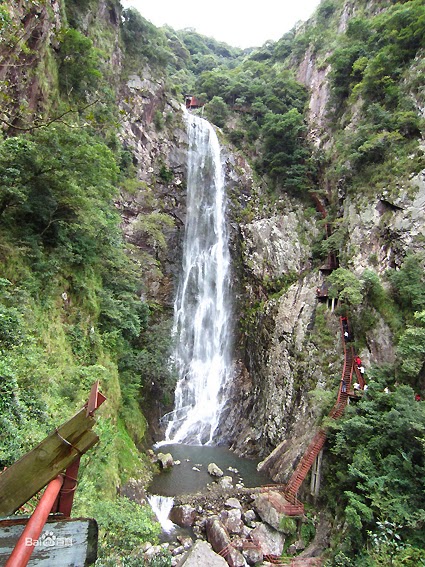
The Qishan Mountain Forest Park is located to the west of Fuzhou City, only 20 minutes drive from the city. Covering an area of 3,587 hectares, the mountain boasts fresh air, wild plants and animals, ancient roads, waterfalls, lakes, deep ponds, bridges and caves. It also features granite landscapes. It is a perfect place for summer vacations, exploration, camping, picnics and hiking.

Admission: 20 yuan (US$3.26) / person

Pingtan Island(平潭岛)
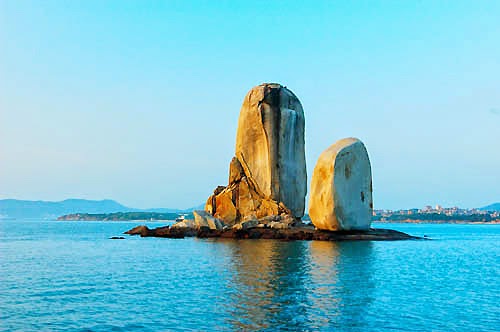
Pingtan Island, also known as Haitan Island, is the largest island in Fujian, and the fifth largest in China. It is located on the eastern coast of Fujian Province, 128 kilometers (79.54 miles) from the center of Fuzhou.

The island boasts a beautiful coastal landscape with clean and fresh water and soft and fine sand. It is an area free from pollution. The sea erosion landscapes are a unique feature of the island. Covering an area of 267.13 square kilometers (26,713 hectares), the island has 6 tourist sections and 2 beach resorts. It is an ideal place for a summer vacation.

Admission: Free

Xichan Temple(西禅寺)
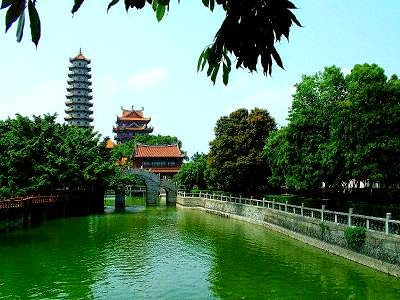
Xichan Temple is an ancient temple which can be traced back to the Tang Dynasty (618-907). It is located in the west of Fuzhou City, at the foot of the Yi Mountain. It is one of five Buddhist temples in the city.

There are 38 buildings in the temple, including halls, pavilions, houses, towers and a dagoba, as well as lakes, bridges and a garden, covering an area of 7.7 hectares. The temple contains Emperor Kangxi’s handwriting and Qing Dynasty (1644-1911) murals. The litchi trees planted in the Song Dynasty (960-1279) are another feature.

Admission: 20 yuan (US$3.26) / person

Yushan Mountain(于山景区)
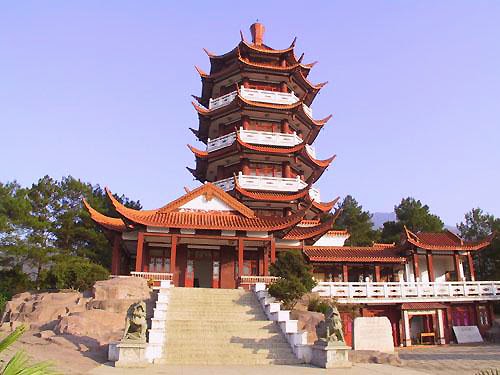
Located in the center of Fuzhou's downtown area, Yushan Mountain has been an attraction since China’s Warring States period (476-221 BC), when the mountain was called Jiuri. Covering an area of 11.9 hectares, it resembles a huge legendary turtle.

As a historical protection zone, Yushan Mountain now has a number of historical sites, including a white tower, temples, platforms, wells, palaces and over 100 stone inscriptions. The 7-story octagonal tower, 45.35 meters high, is the symbol of the city.

Admission: Free

Shizhu Mountain(石竹山)
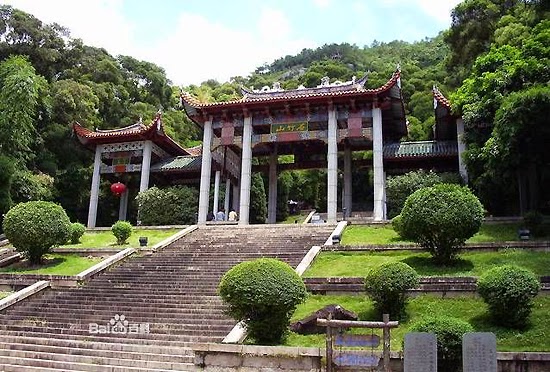
Shizhu Mountain is located in Honglu County, Fuqing, a county-level city administrated by Fuzhou. 

It is a major attraction in Fujian Province and has been officially listed as an intangible cultural heritage.

The name Shizhu, which means stone and bamboo in Chinese, comes from the mountain’s bizarre rock formations and beautiful bamboo. Although it is a Taoist Holy Mountain, it is home to all three dominant religions in China: Taoism, Buddhism, and Confucianism. The mountain has 128 scenic spots, featuring temples, caves, stones and towers, among which, Shizhu Temple, Lion Rock and Ziyun Cave and Ziyun Tower are the most impressive.

Admission: 25 yuan (US$4.08) / person

Qingyun Mountain(青云山)

Located in Linglu Town in Yongtai County, 76 kilometers (47.22 miles) south of Fuzhou city center and 58 kilometers (36.04 miles) north of Putia, Qingyun Mountain is a national-level scenic area boasting towering peaks. It covers a total area of 47 square kilometers (4,700 hectares), with several peaks over 1,000 meters above sea level.

The most unique feature of the mountain is the 12-level stone corridor which was formed naturally, and is 1,028 meters long. Features along the corridor include waterfalls, caves, trees and cliffs, attracting a great number of visitors. Wild plants and animals, such as ferns, gazelles and monkeys can also be found there.

Admission: 25 yuan (US$4.08) / person (summer)

20 yuan (US$3.26) / person (winter)

Gushan Mountain(鼓山)
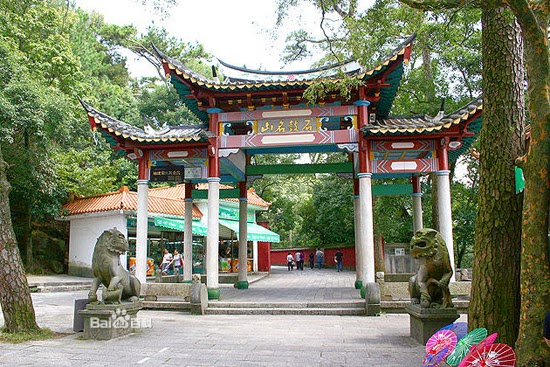
Located in the eastern suburbs of Fuzhou, about eight kilometers (4.97 miles) from the city center, Gushan Mountain is one of the most famous scenic areas in the city. It was named after a huge rock on the summit which resembles a drum and sounds like a drum in the wind or rain.

Measuring 925 meters high, the mountain has more than 100 scenic spots, including pavilions, temples, caves and peaks. The most impressive feature is the 300 inscriptions on the cliff face left by literati in ancient times, including 109 from the Song Dynasty (960-1279).

Admission: 40 yuan (US$6.53) / person

Fuzhou National Forest Park(福州国家森林公园)
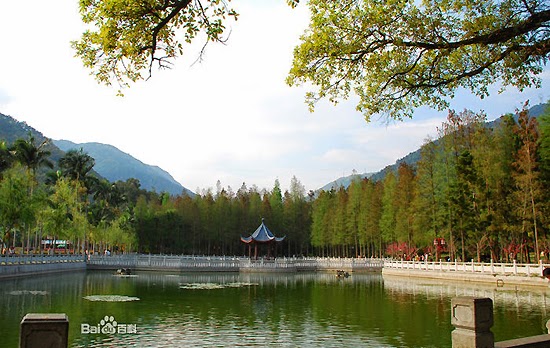
Also known as the Fuzhou Botanical Garden, the Fuzhou National Forest Park is one of the 10 national forest parks in China. It is situated in the north suburb of Fuzhou, 7 kilometers (4.3 miles) from the downtown area.

Surrounded by mountains on three sides and water on one side, the park features Chinese and exotic plants, rare animals, lakes, flowing waterfalls, unusual rocky outcrops and stone carvings. The area is divided into six sections: the bamboo section, trees section, cultural landscape section, dragon pool section, forest museum and bird forest.

Admission: Free

Three Lanes and Seven Alleys(三坊七巷)
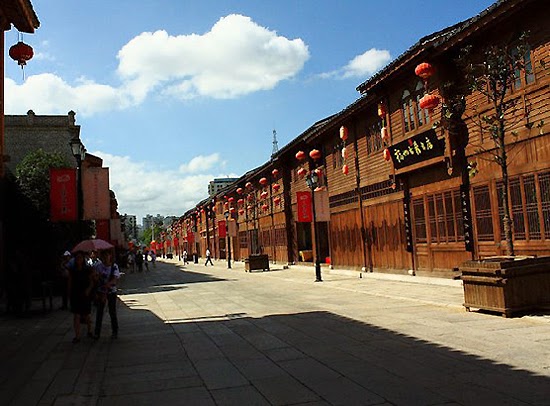
Located in the downtown area of Fuzhou, the Three Lanes and Seven Alleys (Sanfang-Qixiang) is a district of streets featuring a cluster of ancient residential buildings and is the largest well-preserved historical heritage site in China, covering an area of 40 hectares.

With the Southern Street acting as the central axis, the original three lanes were in the west and the seven alleys are in the east. The layout dates back to the Tang (618-907) and Song (960-1279) dynasties, almost 1,000 years ago. The street is unique as it is the only district in China with this pattern..

The lanes and alleys contain hundreds of houses constructed by wealthy people in the Ming and Qing dynasties, and 159 of the buildings remain well-preserved to this day. As a result, the district has been nicknamed "an architectural museum of the Ming and Qing dynasties." The houses were built using huge old bricks and they carry seashell decorations. The ornaments, wood carvings and stone carvings all testify to the past glory of the area and its buildings.

The area has been home to many famous people, including politicians, military leaders, writers and poets. Some of their descendants still reside there today, continuing in the habits of their ancestors. 

Jiqi Alley, Yangqiao Alley and Guanglu Lane have now been converted into driveways. Only two lanes and five alleys remain.

Admission: Free

Source: china.org by xu lin

Sunday, 26 October 2014

China's top 7 Danxia landforms


Mount Danxia (Guangdong)

Mount Danxia is a noted scenic area near Shaoguan in the northern part of Guangdong province. The Danxia mountain is formed from a reddish sandstone that has eroded over time forming a range of mountains surrounded by curvaceous cliffs and unusual rock formations (Danxia Landform). It is described by the local signage as a "world famous UNESCO geopark of China." There are a number of temples located on the mountain range and visitor can enjoy many scenic walks in the area. There is also a river that winds through the mountain area and boat trips along the river are offered to visitors.

Danxia Mountain also has a few unique stones such as the Yang Yuan Stone, Yin Yuan Stone, Breasts stone, Sleeping Beauty and other attractions which make Danxia Mountain a "natural sex culture museum." Particularly noted are two formations: a stone pillar called the Yangyuan ("male/father stone") that bears a remarkable resemblance to a phallus and the Yinyuan hole, which somewhat resembles the female labia.

In the 2010 UNESCO list of world heritage sites, Mount Danxia was listed as a natural World Heritage Site as part of China's Danxia landform

Best travel time: All year around

Wuyi Mountains (Fujian)

The Wuyi Mountains are a mountain range located in the prefecture of Nanping, in northern Fujian province near the border of Jiangxi province. The mountains were listed as a UNESCO World Heritage Site, for cultural, scenic, and biodiversity values in 1999.

The Wuyi Mountains are located between Wuyishan City, Nanping prefecture in Fujian province and Wuyishan,in the city of Shangrao in Jiangxi province. The world heritage site has a total area of 99.975 hectares that is divided into four core parts: the Nine-Bend Stream Ecological Protection Area (36,400 ha) in the center, flanked by the Wuyishan National Nature Reserve (56,527 ha) to the west and the Wuyishan National Scenic Area (7,000 ha) to the east. The fourth part, the Protection Area for the Remains of Ancient Han Dynasty (48 ha) is located in a separate area about 15km to the south-east of the other lcoations. The core parts are surrounded by an additional buffer zone of 27,888 ha.

Best travel time: summer, although it's very hot then but everything is exuberant.

The golden lake (Fujian)

The golden lake is located in Taining County in the northwest of Fujian province. A man-made lake sits at the upper reach and is about 60 kilometers long, and has a capacity of 8.7 hundred million cubic meters. The Golden Lake is surrounded by mountains and verdant forest. Stone bamboo shoots stand tall with springs flowing through them. There are more than 1,000 historic sites, such as the Baishuiji waterfall, Canglu Temple, the lover's peak, great Chibi, above the water, the five-kilometer-long calm lake, to name a few. These features make up the unique scenic spot. The Golden Lake is also regarded as "Lake of Gold" by tourists at home and abroad.

Best travel time: all year around

Mount Longhu (Jiangxi)

Mount Longhu is located in Jiangxi province. It is famous for being one of the birthplaces of Taoism, as many Taoist temples were originally built upon the mountainside. It is particularly important to the Zhengyi Dao as the Shangqing Temple and the Mansion of the Taoist Master are located here. It is known as one of the Four Sacred Mountains of Taoism.

Two of the temples are of Immortal City and Zheng Yi, all founded by Zhang Daoling, the Han Dynasty founder of the religion. There are more Taoist temples in nearby Shangqing. One of the temples in Shangqing is mentioned in the beginning of the famous Chinese novel "Outlaws of the Marsh." Mount Longhu also carries great cultural significance as it is a historical burial site of the Guyue people, who placed their dead in hanging coffins on the mountain cliffs.

In August 2010 UNESCO inscribed Mount Longhu on the World Heritage List as part of the six sites that make up the China Danxia landforms.

Best travel time: all year around

Langshan Mountain (Hunan)

Langshan Mountain is one of China's National Geological Parks famous for its unique Danxia landform and literally means "Crimson Glow." It is a rare topographic feature in world geography. 

Huge rocks of dark red color with grotesque shapes give tourists a marvelous sight. It is located in Xinning County, about 500 km away from Changsha, capital of Hunan province. In the south, Langshan Mountain is connected with Guilin, and in the north it echoes Zhangjiajie. Covering an area of 108 square kilometers, Langshan Mountain is filled with a rich natural scenery and abundant tourism resources. There are more than 500 scenic spots in Langshan Mountain. Among which the most famous are Tianyi Lane, Chili Peak, Zixia Cave, Fuyi River, Innate Bridge, Octagonal Castle, Emperor Xun Forest Park and the Xicun Ancient Dwelling.

In 2008, Langshan Mountain was nominated as a World Nature Heritage. In august, 2009, some experts from the World Nature Heritage visited the site for inspection, and the mountain is expected to become a World Nature Heritage site next July. If this happens, it will be the second World Nature Heritage in Hunan after Wulingyuan in Zhangjiajie. The name of Langshan comes from an ancient legend. It is said that when Shun, a legendary monarch in ancient China, passed by the mountain, he felt the mountains and rivers here were so wonderful, so he entitled the mountain with a Chinese character - Lang, meaning "good mountains."

Langshan Danxia landform and the evolution of its climate and features are representatives of Earth's historical evolution in Southeast Asia since the Cretaceous, and also represents the crust evolution process and the ancient environmental change of southeast China over 100 million years. It is considered to be an excellent example of the main stage of geo-evolution history.

Best travel time: all year around

Zhangye (Gansu)

Zhangye Danxia is located in the middle of the Hexi Corridor in Gansu Province's Zhangye city. 

Zhangye Danxia landforms cover one hundred square mountain hills, with unique shapes and colors.

Zhangye Danxia landforms offer a wide and magnificent scene, peculiar shapes, bright colors, and is the most typical arid region in China and the largest area of Danxia landscape. It has a very high scientific and tourism value. Zhangye Danxia landform mainly covers the territory of Linze, Sunan 
County with an area of 300 square kilometers. Hierarchical areas are scattered and feature steep rock walls and rich, color classes and colorful screen tower gorges and lakes,

Best travel time: June-September

Chuishui (Guizhou)

The Chishui Danxia inherited from the synergy of the strong and intermittent Cenozoic uplifts of the Himalayan Orogeny and the heat-moisture matched Asian Monsoon, and it has not been damaged from the scouting process of the last glaciations.

Chishui Danxia demonstrates the richness of the Danxia landform diversity. Positive and negative Danxia landforms are not only of high value in explaining Danxia landform evolution, but also show high aesthetic significance.

The Chishui Danxia is big and has tall forests where ancient vegetation and modern vegetation stemming from many species co-exist, revealing an important and on-going process of biology and ecology. Chishui Danxia has a high-level of biodiversity and provides refuge and habitats for many rare and endangered species.

Best travel time: all year around

Source: China Daily

Tuesday, 8 April 2014

Ancient village of Peitian in Fujian province


Peitian, nestled in the deep mountains of western Fujian province, is a well-preserved ancient Hakka (Kejia in Chinese) village. Formed between the Ming Dynasty (1368- 1644) and the Qing Dynasty (1616- 1911), the town has a long history of 800 years. 

But after hundreds years, the area is still undisturbed and retains its original appearance. With a population of just over 1,400, the ancient architectural complex consists of 30 grand mansions, 21 ancient ancestral temples, six ancient Chinese schools, two memorial arches and a 1000-meter-long ancient street of cobblestones. Travelers can not only experience the unique local customs, but also enjoy a quiet and peaceful lifestyle.

Source: china.org